
.png)


.png)

.png)


Blog
What Is the Design-Build Method for Homes?
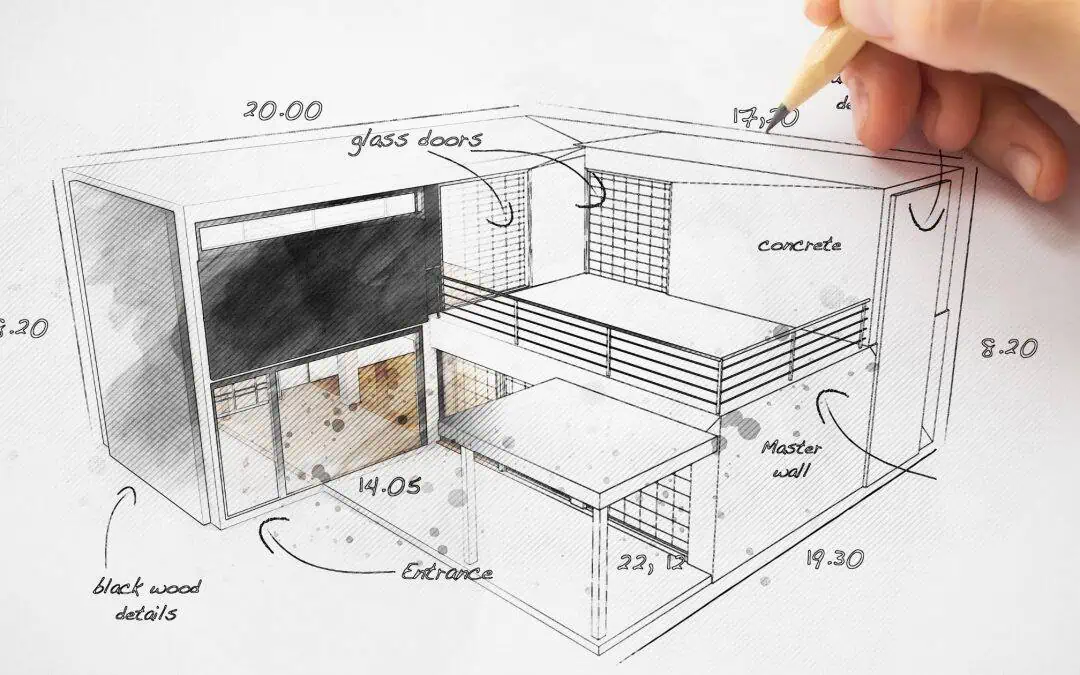
The design-build method for homes is a project delivery approach where one team handles both the design and construction of your home under a single contract. Instead of hiring an architect and a builder separately, you work with one company that manages the entire process from the first sketch to the final walkthrough. According to the Design-Build Institute of America (DBIA), design-build projects are completed 102% faster and experience 3.8% less cost growth than the traditional design-bid-build method. By 2028, nearly 50% of all U.S. construction spending is projected to use design-build, totaling $2.6 trillion. This article explains how the design-build method works, how it compares to traditional contracting, and why it has become the fastest-growing project delivery method in the country.
What Is the Design-Build Method and How Does It Work?
The design-build method is a construction delivery system where the homeowner signs one contract with a single firm that provides both architectural design and construction services. The design team and the building crew work together from the very beginning of the project, which means the people drawing your plans are the same people who will build your home.
The process starts with a conversation about your goals, your budget, and your vision. From there, the design-build team creates plans while keeping real-world construction costs in mind at every step. Because the designer and builder are on the same team, problems get solved on paper during the design phase, not on the jobsite during construction when fixes are expensive.
This is different from the traditional approach, called design-bid-build, where you hire an architect first to create plans and then take those finished plans to multiple contractors for competitive bids. In that model, the architect and builder work independently, and the homeowner is responsible for managing the relationship between the two. According to FMI research conducted for DBIA, design-build construction spending is growing at a 2.9% compound annual growth rate through 2028, and Texas, California, and Florida account for nearly 30% of all anticipated design-build spending nationwide.
For homeowners in Coral Gables and across Miami-Dade County, the design-build approach is especially valuable because of the region's complex building codes, hurricane requirements, and architectural review processes. A design-build custom home team in Coral Gables can coordinate design, engineering, permitting, and construction as one seamless process rather than a series of disconnected steps.
Is Design-Build Cheaper Than Design-Bid-Build?
Yes, design-build is generally cheaper than design-bid-build when you compare total project costs. Research from the Construction Industry Institute at the University of Texas found that design-build projects had lower cost growth, fewer change orders, and shorter delivery times than design-bid-build projects. The DBIA reports that design-build projects experience 3.8% less cost growth and 6% fewer change orders than traditional methods.
The upfront price on a design-build contract may look higher than the lowest bid in a competitive bidding process. But that number tells the whole story. Traditional bids often leave out costs that show up later as change orders. According to industry research, change orders on design-bid-build projects can add 10% to 15% or more to the final bill. Some projects experience cost overruns of 28% or higher. The "cheapest" bid frequently becomes the most expensive choice by the time the project is finished.
Architectural fees are also lower in design-build. According to KGA Architecture, design-build architectural fees typically run between 5% and 8% of construction costs. In a design-bid-build contract, architectural fees can range from 12% to 20% because the plans require a much greater level of detail to allow for competitive bidding.
Homeowners in the Coral Gables area who want to compare these approaches in more detail can find a thorough breakdown in the analysis of whether design-build firms are more expensive than traditional contractors.
What Are the Downsides of Design-Build?
The downsides of design-build include less competitive pricing pressure, less owner control over the design process, and the need to place significant trust in one firm. Because there is no separate bidding phase, you do not get to compare prices from multiple contractors on the same set of plans. You are relying on one team to give you a fair price.
Some homeowners also feel they have less creative control compared to working with an independent architect. In design-build, the designer and builder collaborate closely, which means design decisions are always filtered through the lens of what is buildable and what fits the budget. This is actually a strength for most projects, but homeowners who want to push the boundaries of architectural design without budget constraints may prefer the flexibility of hiring an independent architect first.
The biggest risk with design-build is choosing the wrong firm. If the design-build team lacks experience, communication breaks down, or the firm does not have a strong network of subcontractors, the advantages disappear. That is why selecting a design-build partner with a proven track record, a strong local reputation, and a deep portfolio is critical. In Coral Gables, where projects involve HVHZ building codes, architectural review boards, and premium finishes, experience matters more than in most markets.
What Is the Difference Between Design-Build and Progressive Design-Build?
The difference between design-build and progressive design-build is when the final price is locked in. In standard design-build, the team provides a fixed price early in the process, often before the design is fully complete. In progressive design-build, the owner and the design-build team work together through the design phase before agreeing on a final guaranteed price.
Progressive design-build gives the owner more input during the design development stage while still keeping the benefits of a single-team approach. According to the 2024 FMI Design-Build Utilization Study, progressive design-build is gaining momentum, especially for complex projects where flexibility and cost predictability are both priorities. The DBIA describes it as a procurement approach of growing interest across the construction industry.
For residential custom homes, standard design-build is the most common approach. Progressive design-build is more frequently used on large commercial and infrastructure projects. However, the collaborative spirit behind progressive design-build, where the owner is deeply involved in design before a final price is set, is something the best residential design-build firms practice naturally.
Why Do Builders Charge an Extra 20%?
Builders charge a markup of 10% to 20% (or more) on top of direct construction costs to cover their overhead, profit, project management, insurance, warranties, and business expenses. This is standard in the construction industry and applies to both design-build and traditional contractors.
According to the NAHB 2024 Cost of Construction Survey, the average builder profit margin was 11.0% of the home's final sale price, with overhead and general expenses adding another 5.7%. Together, that is 16.7% of the total. Sales commissions (2.8%), financing costs (1.5%), and marketing costs (0.8%) make up the rest.
The markup pays for real services. Your builder manages dozens of subcontractors, orders materials, coordinates inspections, handles permits, keeps the project on schedule, and stands behind the work with warranties. In Coral Gables, the complexity of Miami-Dade County's HVHZ requirements, the city's architectural review process, and the coordination needed for luxury-grade finishes demand experienced project management. Homeowners who want to learn more about what goes into contractor fees can explore the topic of project manager costs for a build.
When Should You Use Design-Build for Your Home?
You should use design-build for your home when you want a streamlined process, a single point of contact, better budget control, and faster project delivery. Design-build works best for custom homes, whole-home renovations, complex additions, and any project where design and construction need to be tightly coordinated.
Design-build is the right choice when your project involves structural changes, because the builder's input during the design phase prevents costly engineering surprises later. It is the right choice when your timeline is tight, because design and construction can overlap instead of happening in sequence. And it is the right choice when budget predictability matters, because the design-build team gives you a reliable cost picture before construction starts.
According to the FMI 2024 study, industry stakeholders highlighted that design-build is most advantageous for projects with high complexity or critical schedules. For homeowners in the Miami and Coral Gables area who are planning a new construction project or a full home remodel, design-build eliminates the friction that comes from managing separate design and construction teams.
What Is Another Name for Design-Build?
Another name for design-build is "single-source delivery" or "integrated project delivery." It is also sometimes called "turnkey construction" because the homeowner hands the project to one team and receives a finished home ready to move into. In the residential world, design-build firms may also be called "design-build contractors" or "design-build remodelers."
The term "design-build" was formally established by the Design-Build Institute of America, which was founded in 1993 to promote and advance this project delivery method. Before the term became standard, the approach was often simply described as "master builder" construction, a concept that dates back thousands of years to ancient civilizations where a single individual or team designed and built structures.
Is Design-Build a Lump Sum Contract?
Yes, design-build projects often use a lump sum (fixed-price) contract, but not always. A lump sum contract means the homeowner pays one agreed-upon price for the entire project. The design-build firm assumes the risk for cost overruns, which gives the homeowner strong budget protection.
Other contract types used in design-build include guaranteed maximum price (GMP) contracts, where the homeowner pays actual costs up to a set ceiling, and cost-plus contracts, where the homeowner pays actual costs plus a fixed fee or percentage. Lump sum and GMP contracts are the most common in residential design-build because they give homeowners the most cost certainty. Your design-build firm should explain the contract type before you sign and help you choose the structure that fits your project and your comfort level.
Is There Bidding in Design-Build?
No, there is no traditional competitive bidding process in design-build the way there is in design-bid-build. In design-build, the homeowner selects a design-build firm based on qualifications, experience, portfolio, and reputation, not on who submits the lowest bid. The design-build team then provides a price as part of an integrated proposal that covers both design and construction.
This does not mean there is no price competition within the project. A good design-build firm will competitively bid subcontractor work and material purchases to get the best value for the homeowner. The difference is that the homeowner is not managing the bidding process. The design-build firm handles it internally, leveraging their relationships with trusted subcontractors to get quality work at fair prices.
According to the DBIA, competitive best-value selection is the most frequently used way of choosing a design-build contractor. This means owners evaluate firms on a combination of qualifications, approach, and price rather than price alone. For residential projects in Coral Gables, selecting a firm based on their experience with local codes, their completed project portfolio, and their reputation in the community is far more important than finding the lowest number.
What Is the 30%, 60%, 90% Design Process?
The 30%, 60%, 90% design process refers to the stages of design development where plans are reviewed at three key milestones before they are finalized. At 30% design, the overall concept, layout, and major systems are established. At 60% design, detailed drawings, material selections, and engineering are largely complete. At 90% design, the plans are nearly final and ready for permit submission and construction pricing.
This phased approach allows the homeowner and the design-build team to review progress, make adjustments, and lock in costs at logical checkpoints. It prevents the kind of last-minute surprises that blow up budgets and timelines. Each review stage gives you a chance to confirm that the project is heading in the right direction before more money is spent on detailed drawings and engineering.
In Coral Gables, the 30/60/90 process is especially useful because it allows the team to incorporate Miami-Dade County HVHZ requirements, city architectural review guidelines, and structural engineering early in the design rather than discovering conflicts during the permitting phase. The result is smoother permitting, fewer revisions, and a faster path to construction. Homeowners interested in the technical side of the design process can learn more about how architectural drawings assist in the construction process.
Design-Build vs. Design-Bid-Build: Side-by-Side Comparison
FactorDesign-BuildDesign-Bid-Build (Traditional)Number of ContractsOne contract (design + build)Two or more (separate architect and builder)Delivery Speed102% faster (DBIA)Slower due to sequential phasesCost Growth During Project3.8% less than traditional (CII)Higher risk of cost overrunsChange Orders6% fewer (DBIA)More frequent due to design-construction gapsArchitectural Fees5% to 8% of construction cost12% to 20% of construction costOwner ResponsibilitySingle point of contactOwner manages architect-builder coordinationRisk AllocationDesign-build firm assumes more riskOwner assumes more riskU.S. Market Share (2028 projected)47% of construction spendingDeclining (15% projected)
Sources: Design-Build Institute of America (DBIA), Construction Industry Institute (CII) at the University of Texas, FMI 2024 Design-Build Utilization Study, KGA Architecture, Engineering News-Record (ENR).
Why Is Construction Slow in 2025?
Construction is slow in 2025 because of a combination of labor shortages, material cost increases, tariff uncertainty, elevated interest rates, and tighter lending conditions. According to the Associated General Contractors of America (AGC), 81% of construction firms raised base pay rates over the past year to attract workers, and 50% of firms reported that owners canceled, postponed, or scaled back projects because of rising costs.
Autodesk and Deloitte research found that the two most common challenges facing construction businesses are raw material costs (cited by 52% of firms) and labor costs (cited by 37%). The U.S. Census Bureau reported that an estimated 1,358,700 housing units were started in 2025, which is 0.6% below the 2024 figure. Building permit authorizations were down 3.6% from the prior year as well.
In the Miami and Coral Gables market, high demand for skilled trades, strict building code requirements, and long permit review timelines add additional pressure. Despite these headwinds, design-build projects tend to weather market slowdowns better than traditional methods because the integrated team can adapt to material availability, adjust schedules, and manage costs more nimbly. Homeowners who want to better prepare for the current construction climate can find helpful information on the construction process and what to expect at each stage.
What Is the Least Expensive Style of House to Build?
The least expensive style of house to build is a simple rectangular or square single-story home with a basic roofline. Rectangular floor plans minimize material waste, require less structural engineering, and are faster to frame than homes with complex shapes, multiple wings, or multi-story layouts.
According to multiple builder sources, the most affordable construction styles include ranch-style homes, simple colonial layouts, and modular or pre-designed floor plans. Adding corners, curves, multi-level rooflines, and custom architectural features all increase cost. Second stories add expense for staircases, structural reinforcement, and additional plumbing runs.
In South Florida, construction method also matters. Concrete block (CMU) construction is the standard for most homes and offers good hurricane resistance at a mid-range price point. Insulated concrete forms (ICF) cost more upfront but deliver better energy efficiency and storm protection. Wood framing is the cheapest option but the least durable in a hurricane-prone area like Coral Gables. A design-build team that knows the local market can help you choose the right balance of style, durability, and cost for your budget.
Frequently Asked Questions
Is Design-Build Good for Custom Homes in Coral Gables?
Yes, design-build is an excellent approach for custom homes in Coral Gables. The city's strict architectural review process, Miami-Dade County's HVHZ building codes, and the complexity of luxury home construction make the integrated design-build approach especially valuable. Having one team that manages design, permitting, engineering, and construction eliminates the communication gaps that cause delays and cost overruns in traditional projects. According to DBIA data, Florida is one of the top three states for design-build spending nationally.
How Long Does a Design-Build Home Project Take?
A design-build home project typically takes 10 to 18 months from the first design meeting to final completion, depending on the size and complexity of the home. Design-build projects are completed 102% faster than design-bid-build projects, according to DBIA research. The time savings come from overlapping the design and construction phases and eliminating the competitive bidding step. In Coral Gables, permitting timelines of 8 to 16 weeks should be factored into the overall schedule.
Do Design-Build Firms Handle Permits in Miami-Dade County?
Yes, reputable design-build firms handle all permitting as part of their scope of work. In Miami-Dade County, this includes building permits, trade permits (plumbing, electrical, HVAC, roofing), impact fee calculations, and structural engineering reviews required by the HVHZ code. In Coral Gables, the design-build firm also manages the city's architectural review board submission. This is one of the major advantages of design-build, as the homeowner does not need to coordinate between separate teams for permit approvals.
What Should I Look for in a Design-Build Firm in South Florida?
You should look for a design-build firm in South Florida that has a proven track record with local projects, proper licensing in Miami-Dade County, experience with HVHZ code requirements, a strong portfolio of completed homes, transparent pricing, and references from past clients. The firm should handle design, engineering, permitting, and construction under one contract. Ask about their process for managing budgets and timelines, and visit completed projects in the Coral Gables area if possible.
Can Design-Build Be Used for Home Renovations, Not Just New Construction?
Yes, design-build can be used for home renovations, additions, and remodels in addition to new construction. The design-build approach is well suited for home renovation projects because renovations often involve unexpected discoveries behind walls and under floors that require real-time collaboration between the designer and builder. A design-build team can adapt the design on the fly without the delays that come from sending changes back and forth between separate firms.
How Does Design-Build Help With Hurricane Code Compliance in Florida?
Design-build helps with hurricane code compliance in Florida by integrating structural engineering, product selection, and code review into the design phase from the very beginning. In Miami-Dade County's High Velocity Hurricane Zone, every window, door, roof component, and structural connection must meet strict wind resistance standards and carry a Notice of Acceptance (NOA). A design-build team selects these products during design, coordinates engineering, and submits complete permit packages, which prevents the costly back-and-forth that happens when a separate architect specifies products that do not meet code.
When Did Design-Build Become Popular?
Design-build became popular in the United States during the 1990s and 2000s, though the concept of a single master builder handling both design and construction dates back to ancient civilizations. The Design-Build Institute of America was founded in 1993 to formalize and promote the method. According to Engineering News-Record, design-bid-build's share of construction spending fell from 23% to a projected 15% as design-build grew to represent 47% of U.S. construction spending. The shift accelerated after multiple university studies confirmed that design-build delivered projects faster, with lower cost growth, and fewer change orders.
Final Thoughts
The design-build method is the fastest-growing project delivery approach in the United States for good reason. It gives homeowners a single point of contact, better cost control, faster timelines, and fewer surprises. For custom homes and major renovations in complex markets like Coral Gables and Miami-Dade County, where hurricane codes, architectural review boards, and luxury standards all demand precision, design-build is the approach that makes the most sense.
If you are ready to build or renovate your home the right way, Cutting Edge Innovative is a trusted design-build firm in Coral Gables that manages every detail from concept to completion. Their team specializes in design-build custom homes, whole-home renovations, and luxury construction throughout South Florida. Call (786) 957-7775 or request a quote today to see why design-build is the smarter way to build your dream home.

Previous post

