
.png)


.png)

.png)


Blog
Which Pool Type Adds the Most Home Value
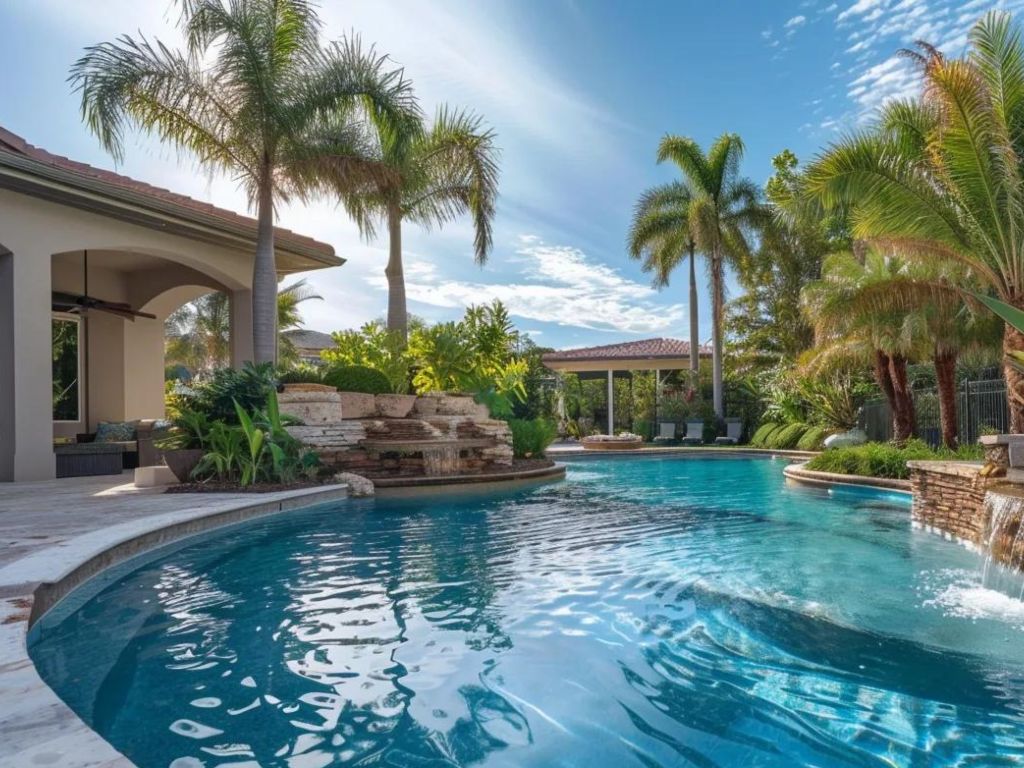
The pool type that adds the most home value is a custom inground concrete (gunite) pool with integrated luxury features like a spa, sun shelf, and smart automation. According to the National Association of REALTORS Remodeling Impact Report, an inground pool installation offers an average ROI of about 56%, with the typical project increasing home value by roughly $50,000 on an average cost of $90,000. Real estate experts estimate that a well-designed inground pool can boost a home's value by 5% to 15% depending on the location, climate, and neighborhood standards. In South Florida markets like Coral Gables, where outdoor living is a year-round lifestyle, a pool is not a luxury. It is an expected feature that directly impacts marketability. This article compares pool types by value, breaks down costs and ROI, covers the latest design trends, and explains what Coral Gables homeowners should consider before building.
What Pool Type Adds the Most Home Value?
The pool type that adds the most home value is a custom inground concrete (gunite) pool. Concrete pools offer unlimited design flexibility, the longest lifespan, and the strongest perceived value among both appraisers and buyers. According to real estate experts, inground pools can increase a home's value by 7% to 15% in warm-climate markets where pools are a standard neighborhood feature.
Fiberglass pools rank second for home value. They cost less than concrete, install faster, and require less maintenance. A fiberglass pool with a premium finish can add nearly as much value as concrete in neighborhoods where buyers prioritize a turnkey, low-maintenance outdoor experience. However, fiberglass is limited in shape and size options compared to concrete, which can be a disadvantage in luxury markets where custom design matters.
Vinyl liner pools rank third. They are the least expensive inground option, but they also add the least resale value. According to Leisure Pools, vinyl liner pools generally look cheaper and more temporary than fiberglass or concrete pools, and buyers perceive them as lower quality. The liner itself needs replacement every 7 to 12 years at a cost of $3,000 to $7,000, which further reduces their long-term appeal.
Above-ground pools add little to no resale value. Most buyers view them as temporary additions rather than permanent home improvements. In many cases, sellers remove above-ground pools before listing because they can actually reduce buyer interest by limiting yard space.
In the Coral Gables luxury market, where homes regularly sell above $1 million, a custom concrete pool designed to complement the home's architecture and landscaping is the clear winner for both lifestyle and resale value. Homeowners who are building or renovating outdoor spaces often integrate the pool into a complete outdoor living and entertainment space that includes a covered patio, outdoor kitchen, and lounge area.
How Much Does an Inground Pool Increase Property Value?
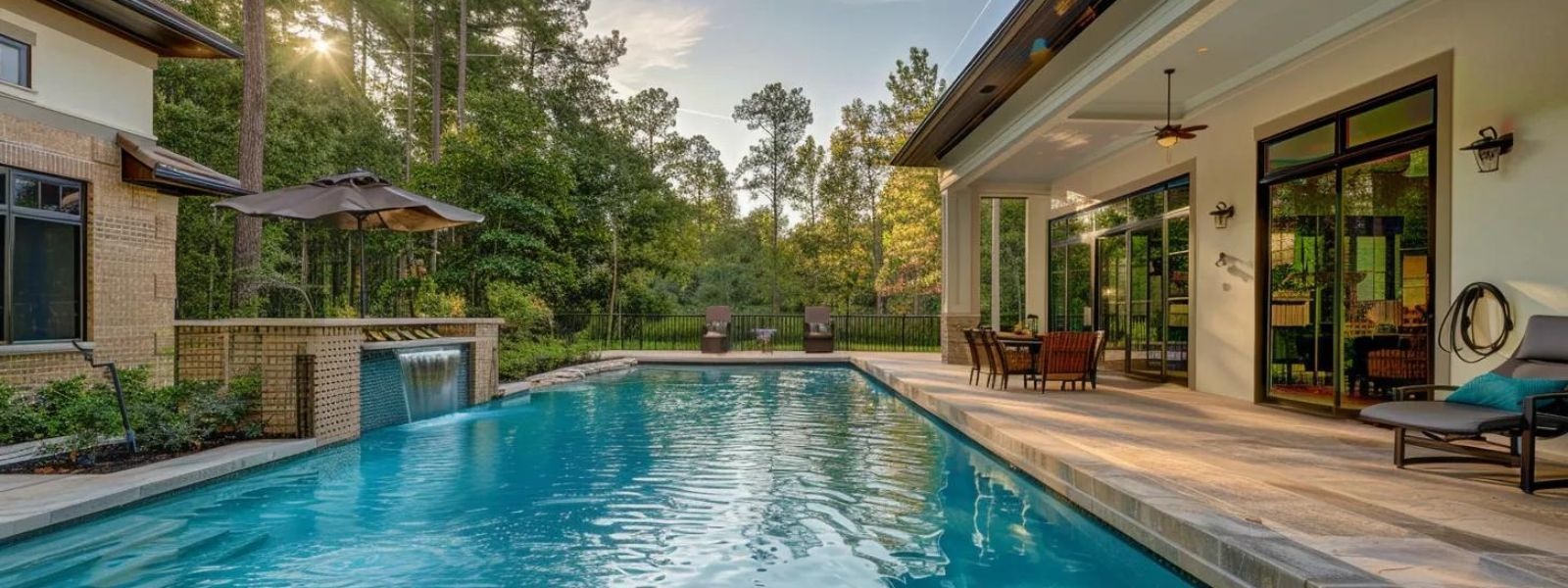
An inground pool increases property value by 5% to 8% on average in desirable markets. According to the NAR Remodeling Impact Report, the average ROI for an inground pool installation is approximately 56%, with a typical project costing around $90,000 and adding roughly $50,000 in home value. In warm-climate states like Florida, Arizona, and California, the value increase can be significantly higher.
For a $600,000 home, a 5% pool-related price premium adds about $30,000. For a $1.5 million home in Coral Gables, that same 5% translates to $75,000. In luxury neighborhoods where most comparable homes have pools, the absence of one can actually decrease marketability and push offers lower. The pool is not adding bonus value in these cases. It is meeting the baseline expectation for the neighborhood.
The condition and design of the pool matter enormously. A well-maintained pool with updated tile, modern automation, and an integrated spa commands a premium. An aging pool with cracked decking, outdated equipment, and visible wear can actually become a liability that reduces buyer interest rather than enhancing it. According to Deep Blue Pool and Spa, the average cost of inground pool installation in Florida ranges from $35,000 to $65,000, with custom luxury pools exceeding $100,000.
Location is the most important factor in pool ROI. In South Florida, not having a pool in a luxury neighborhood puts a home at a competitive disadvantage. Buyers relocating from colder climates to Coral Gables, Coconut Grove, or Key Biscayne expect a pool as part of the outdoor living package.
Homeowners who are adding a pool as part of a larger property upgrade often combine the project with waterfront and coastal home construction services that address both the pool area and the surrounding landscape.
Does a Pool Make a House Harder to Sell?
Yes, a pool can make a house harder to sell in some situations, but not in South Florida. In colder climates where pools are only usable for a few months each year, a pool narrows the buyer pool. Families with young children may view a pool as a safety concern. Buyers who do not want the maintenance responsibility may pass on a home with a pool altogether.
In warm-climate markets like Miami-Dade County, the opposite is true. A pool makes a house easier to sell because buyers expect it. According to Redfin, pools are viewed as a desirable amenity rather than a seasonal luxury in places like Florida, Arizona, and Southern California. In these markets, homes with pools attract more buyer interest, receive stronger offers, and often sell faster than comparable homes without a pool.
The key factor is the pool's condition. An older pool with outdated equipment, stained surfaces, or structural issues can become a negotiation point that drives down the sale price. Buyers will calculate the cost to renovate or replace the pool and deduct that from their offer. A move-in-ready pool with modern automation, clean surfaces, and an attractive deck area adds value rather than creating friction.
Safety compliance also matters. Florida law requires a barrier around residential pools, and buyers will verify that the property meets current safety codes. A pool that is compliant with all local regulations, including fencing, alarms, and drain covers, gives buyers confidence and removes a potential deal-breaker.
Homeowners who want to sell a home with an older pool should consider updating the pool area before listing. Pairing a pool renovation with exterior curb appeal enhancements creates a complete outdoor presentation that photographs well and impresses during showings.
What Are the Latest Pool Design Trends?
The latest pool design trends for 2025 and 2026 include dark interior finishes, smart automation, integrated spas, sun shelves, glass tile mosaics, infinity edges, and resort-style outdoor living spaces. According to Southern Pool Designs, luxury pool design in Florida is moving away from traditional light blue finishes toward darker tones like charcoal quartz, black pebble, and deep sapphire that create a moody, mirror-like water surface.
Smart automation has become a standard expectation in luxury pools. Homeowners can control lighting, temperature, filtration, and water features from a smartphone app. According to multiple South Florida pool designers, automation is no longer a luxury add-on in 2026. It is a baseline feature that buyers expect in higher-end homes. Some systems even use AI to monitor water quality in real time and adjust chemical levels automatically.
Integrated spas and sun shelves are two of the most popular features. A spa built into the pool structure allows seamless transitions between hot and cool water. Sun shelves, also called tanning ledges or Baja shelves, create shallow lounging areas within the pool where homeowners can relax partially submerged. These features are especially popular in Coral Gables, where outdoor living is central to daily life.
Glass tile mosaics are replacing standard plaster finishes in luxury builds. They reflect light beautifully, resist fading from Florida's intense sun, and are highly customizable in terms of color, pattern, and gradient. According to Epic Water Shapes, glass mosaics paired with programmable LED lighting create a dramatic nighttime effect that transforms the pool area into a private resort.
Homeowners building or renovating luxury outdoor spaces in Coral Gables benefit from working with a team that understands how pool design integrates with the overall property. A modern and contemporary architectural home design approach ensures the pool complements the home's architecture rather than looking like an afterthought.
What Doesn't Add Value to Your Home?
The home improvements that do not add value include above-ground pools, overly personalized renovations, luxury upgrades in low-value neighborhoods, swimming pools in cold climates, and high-end features that exceed what comparable homes in the area offer. According to real estate experts, the biggest mistake homeowners make is assuming that every dollar spent on upgrades translates to an equal increase in home value.
Above-ground pools are the clearest example. They cost between $1,500 and $15,000 to install but add zero resale value in most markets. Appraisers do not credit above-ground pools because they are considered temporary structures, not permanent home improvements. Many sellers remove them before listing to avoid creating a negative impression.
Over-improvement is another common trap. Installing a $200,000 infinity-edge pool on a property where comparable homes sell for $400,000 will not generate a proportional return. The 30% rule, which caps total renovation spending at 30% of the home's value, is a helpful guideline. A pool should be proportional to the home's value, the lot size, and the neighborhood standards.
Highly personalized features like themed water parks, extreme depths, or unconventional shapes can also reduce buyer appeal. Most luxury buyers want a clean, modern pool that complements the home's design. Features that cater to a very specific taste may excite the current owner but alienate future buyers.
The smartest pool investments are those that align with what comparable homes in the neighborhood offer. In Coral Gables, that means a well-designed concrete pool with a spa, modern deck, and automation system. Homeowners who want to protect their investment should work with a builder experienced in design-build custom homes who can integrate the pool seamlessly into the overall property design.
How Much Does It Cost to Build a Pool in South Florida?
The cost to build a pool in South Florida ranges from $35,000 for a basic inground installation to over $250,000 for a large luxury pool with a spa, fire features, custom finishes, and an integrated outdoor living area. According to Cox Pools, small to mid-size custom gunite pools in Florida generally fall between $65,000 and $95,000, while larger luxury pools range from $120,000 to $250,000 or more.
The pool type is the biggest cost driver. Concrete (gunite) pools are the most expensive but offer the greatest design flexibility and the longest lifespan. Fiberglass pools cost less and install faster, but they are limited in size and shape options. Vinyl liner pools are the most affordable inground option but have the shortest lifespan and the weakest resale impact.
Additional features add significantly to the total cost. An integrated spa typically adds $15,000 to $25,000. A sun shelf or tanning ledge adds $5,000 to $10,000. Smart automation systems add $3,000 to $10,000. Premium glass tile finishes can add $20,000 or more depending on the pool's size. Fire features, waterfalls, and custom lighting each carry their own costs but contribute to the resort-like experience that luxury buyers in Coral Gables expect.
Ongoing costs are also important to factor in. According to Redfin, the average homeowner spends $1,200 to $1,800 per year on pool maintenance, including chemicals, cleaning, repairs, and utility costs. Homeowners insurance premiums typically increase by $50 to $100 per year or more when a pool is added.
Building a pool in Miami-Dade County requires permits from the local building department, and Coral Gables has additional review requirements for any work that affects the property's exterior. Working with a licensed pool builder who handles the full permitting process is essential to avoid delays and code violations.
Families in Pinecrest and Palmetto Bay who are building a pool alongside a home renovation often find that integrating the pool project with a home addition or guest house and in-law suite project creates a more efficient timeline and a better overall design.
Pool Type Value Comparison Table
Sources: NAR Remodeling Impact Report, Redfin, Kiplinger, HomeGuide, Leisure Pools, Deep Blue Pool and Spa, Cox Pools
This table shows that concrete pools deliver the highest resale value and the longest lifespan, making them the clear winner for luxury homeowners in Coral Gables and the greater Miami area. Fiberglass pools offer a strong balance of value and low maintenance. Vinyl liner and above-ground pools are not recommended for homes where resale value is a priority.
What Should You Not Tell an Appraiser?
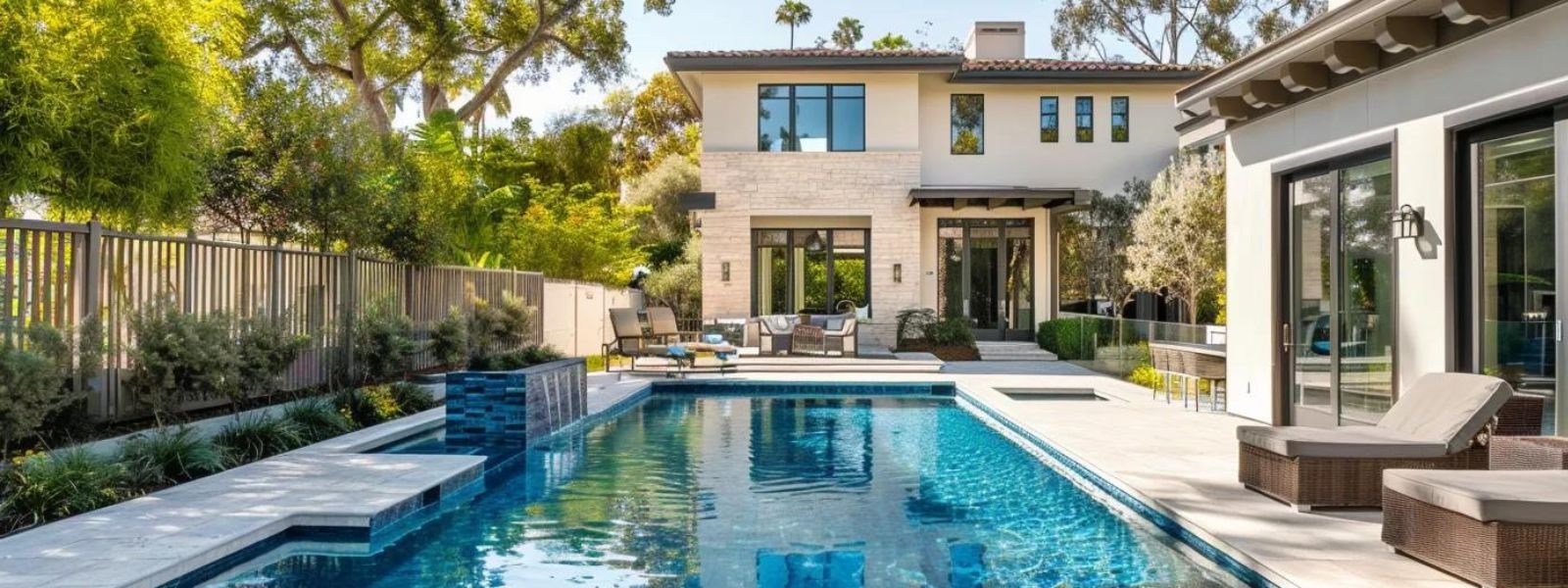
The things you should not tell an appraiser include exaggerated claims about the pool's cost, opinions about what the home should be worth, or attempts to influence the appraisal outcome. Appraisers are licensed professionals who follow the Uniform Standards of Professional Appraisal Practice (USPAP) and must form an independent opinion of value based on comparable sales, property condition, and market data.
What homeowners should do is provide factual documentation. Share the pool's construction permits, final inspection approvals, contractor invoices, and any warranties. If the pool includes premium features like automation, a spa, or custom finishes, list those specifically because they can influence how the appraiser values the property relative to comparable homes with standard pools.
Appraisers do not credit pools at replacement cost. A pool that cost $150,000 to build will not add $150,000 to the appraised value. Instead, the appraiser compares the home to similar properties in the area, some with pools and some without, to determine the market-supported value difference. In Coral Gables, where most luxury homes have pools, the appraiser is looking at whether the pool meets neighborhood standards rather than whether it exists at all.
Unpermitted pool construction is a serious problem. If the pool was built without proper permits and inspections, the appraiser may flag it as an issue that complicates the sale and reduces value rather than adding it. Every pool in Miami-Dade County should be fully permitted and inspected.
Homeowners who want their pool and outdoor area to positively impact their appraisal should make sure the entire property presents well. A spa bathroom remodel inside the home paired with a resort-quality pool outside creates a consistent luxury experience that appraisers and buyers both respond to.
Frequently Asked Questions
Does a Pool Increase Home Value in Coral Gables?
Yes, a pool increases home value in Coral Gables significantly. In the South Florida luxury market, where the median home sale price reached approximately $1.4 million in late 2025 according to Redfin, a pool is an expected feature rather than a bonus amenity. Real estate experts estimate that a custom inground pool can add 5% to 15% to a home's value in warm-climate markets. In Coral Gables neighborhoods where most comparable homes have pools, not having one can put the property at a competitive disadvantage.
What Is the Best Pool Material for Resale Value?
The best pool material for resale value is concrete (gunite). Concrete pools offer the greatest design flexibility, the longest lifespan (50+ years), and the strongest perceived value among buyers and appraisers. Fiberglass ranks second for resale value and is preferred by buyers who want lower maintenance. Vinyl liner pools and above-ground pools add the least resale value and are not recommended for luxury homes where long-term investment matters.
How Much Does a Pool Cost to Maintain Annually in Florida?
A pool costs $1,200 to $1,800 per year to maintain in Florida according to Redfin. This includes chemicals, cleaning, filter maintenance, repairs, and utility costs for running the pump and heater. Smart automation and energy-efficient equipment like variable-speed pumps and LED lighting reduce ongoing costs. Saltwater systems are also growing in popularity because they require less chemical handling and create softer water. Over a 10-year period, total maintenance costs can reach $20,000 to $30,000 or more.
Does a Pool Increase Homeowners Insurance?
Yes, a pool increases homeowners insurance premiums by approximately $50 to $100 per year or more according to Redfin. Many insurers require additional liability coverage when a pool is present, and some may require safety measures like fencing, self-closing gates, and pool covers before issuing or renewing a policy. In Florida, where pool ownership is common, insurance companies are accustomed to pool-related coverage, but homeowners should verify their policy requirements before building.
What Pool Features Add the Most Value?
The pool features that add the most value are integrated spas, sun shelves, smart automation, LED lighting, and premium finishes like glass tile mosaics. According to Town and Country Pools, custom inground pools with these features plus hardscaping, fire pits, and outdoor kitchens create a lifestyle experience that significantly increases both market appeal and sale price. Energy-efficient equipment and saltwater systems also add value because they reduce ongoing costs for future owners.
Do I Need a Permit to Build a Pool in Coral Gables?
Yes, you need a permit to build a pool in Coral Gables. Miami-Dade County requires building permits for all pool construction, and Coral Gables may require additional architectural review for properties in historic districts or those subject to the Board of Architects oversight. Separate permits may be needed for electrical work, fencing, and plumbing. Working without permits can result in fines, forced removal, or complications during the sale of the property. Always work with a licensed pool builder and general contractor who handle the full permitting process.
Final Thoughts
A custom inground pool is one of the most impactful outdoor investments a homeowner can make in South Florida. The data from NAR, Redfin, and multiple real estate sources confirms that pools add real value in warm-climate markets, especially when they are designed with premium materials, modern automation, and features that align with luxury buyer expectations. In Coral Gables and the greater Miami area, where outdoor living is central to daily life and real estate value, a well-designed pool is not an optional feature. It is a competitive necessity.
The key to maximizing pool ROI is integrating the pool into a complete outdoor living experience that includes covered dining, lounge areas, landscaping, and lighting. This comprehensive approach turns a simple pool into a lifestyle destination that makes the entire property more desirable.
Cutting Edge Innovative specializes in luxury outdoor transformations and outdoor living and entertainment spaces across Coral Gables, Coconut Grove, Pinecrest, Key Biscayne, and the surrounding South Florida communities. Call (786) 957-7775 or visit the contact page to schedule a consultation and start planning your custom pool and outdoor living project today.

Previous post

